About the Book
Year Published: 2013
Page Count: 605
ISBN: 978-1-921972-06-5 (9781921972065)
Online ISBN: 978-1-921972-77-5 (9781921972775)
Discontinued Editions
Year Published: 2013
Page Count: 605
ISBN: 978-1-921972-06-5 (9781921972065)
Online ISBN: 978-1-921972-77-5 (9781921972775)
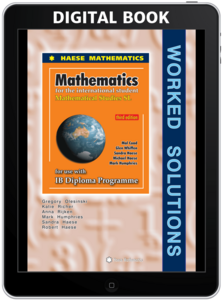
| 1 | NUMBER PROPERTIES | 5 | |
| 2 | MEASUREMENT | 16 | |
| 3 | LAWS OF ALGEBRA | 38 | |
| 4 | EQUATIONS AND FORMULAE | 52 | |
| 5 | SEQUENCES AND SERIES | 100 | |
| 6 | DESCRIPTIVE STATISTICS | 130 | |
| 7 | SETS AND VENN DIAGRAMS | 158 | |
| 8 | LOGIC | 171 | |
| 9 | PROBABILITY | 192 | |
| 10 | THE NORMAL DISTRIBUTION | 218 | |
| 11 | TWO VARIABLE STATISTICS | 231 | |
| 12 | PYTHAGORAS' THEOREM | 250 | |
| 13 | COORDINATE GEOMETRY | 270 | |
| 14 | PERIMETER, AREA, AND VOLUME | 314 | |
| 15 | TRIGONOMETRY | 344 | |
| 16 | FUNCTIONS | 380 | |
| 17 | QUADRATIC FUNCTIONS | 394 | |
| 18 | EXPONENTIAL FUNCTIONS | 428 | |
| 19 | UNFAMILIAR FUNCTIONS | 441 | |
| 20 | DIFFERENTIAL CALCULUS | 478 | |
| 21 | APPLICATIONS OF DIFFERENTIAL CALCULUS | 506 | |
| 22 | MISCELLANEOUS PROBLEMS | 535 |

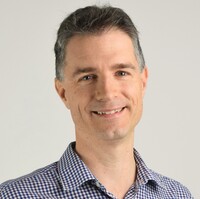
Mark has a Bachelor of Science (Honours), majoring in Pure Mathematics, and a Bachelor of Economics, both of which were completed at the University of Adelaide. He studied public key cryptography for his Honours in Pure Mathematics. He started with the company in 2006, and is currently the writing manager for Haese Mathematics.
What got you interested in mathematics? How did that lead to working at Haese Mathematics?
I have always enjoyed the structure and style of mathematics. It has a precision that I enjoy. I spend an inordinate amount of my leisure time reading about mathematics, in fact! To be fair, I tend to do more reading about the history of mathematics and how various mathematical and logic puzzles work, so it is somewhat different from what I do at work.
How did I end up at Haese Mathematics?
I was undertaking a PhD, and I realised that what I really wanted to do was put my knowledge to use. I wanted to pass on to others all this interesting stuff about mathematics. I emailed Haese Mathematics (Haese and Harris Publications as they were known back then), stating that I was interested in working for them. As it happened, their success with the first series of International Baccalaureate books meant that they were looking to hire more people at the time. I consider myself quite lucky!
What are some interesting things that you get to do at work?
On an everyday basis, it’s a challenge (but a fun one!) to devise interesting questions for the books. I want students to have questions that pique their curiosity and get them thinking about mathematics in a different way. I prefer to write questions that require students to demonstrate that they understand a concept, rather than relying on rote memorisation.
When a new or revised syllabus is released for a curriculum that we write for, a lot of work goes into devising a structure for the book that addresses the syllabus. The process of identifying what concepts need to be taught, organising those concepts into an order that makes sense from a teaching standpoint, and finally sourcing and writing the material that addresses those concepts is very involved – but so rewarding when you hold the finished product in your hands, straight from the printer.
What interests you outside mathematics?
Apart from the aforementioned recreational mathematics activities, I play a little guitar, and I enjoy playing badminton and basketball on a social level.
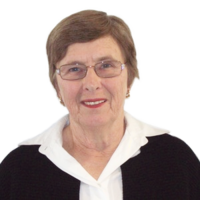
Sandra completed a Bachelor of Science at the University of Adelaide, majoring in Pure Mathematics and Statistics. She taught at Underdale High School and Westminster School before founding Haese and Harris Publications (now Haese Mathematics), together with husband Robert (Bob) and colleague Kim Harris.
What drew you to the field of mathematics?
I always found mathematics the easiest subject at school. I’m not sure why. I intended to study Chemistry at university, but found I didn’t enjoy it as much as I thought I would – so I came back to mathematics, and have been involved with it ever since.
What motivated you to switch from teaching to writing mathematics books?
Bob used to write notes for his class. Other teachers at the school used the notes, then teachers at other schools started asking for them. Eventually Bob said, “Well, I might as well start writing textbooks!”
Initially, I was proofreading. As the workload increased, I began editing as well as proofreading. It just gradually became a full-time job, between writing material, editing and proofreading it, and then distributing the books. These days, Michael does the editing and I do proofreading and audio.
How has the field of textbook publishing changed in the years since you started?
When we started, text was typed and worked solutions were handwritten. Bob would draw any graphics by hand.
We moved to typesetting, but writing a mathematics textbook with the printing tools available presented its own difficulties. For example, symbols had to be copied, cut and pasted by hand onto the original pages, which was very tedious and time-consuming! Fractions were also problematic: we would type a line containing all the numerators, and then a line underneath for all the denominators.
Now it’s all done by computers, which is very much easier, and quicker!
What interests you outside mathematics?
I own a few alpacas. I enjoy my garden - I don’t do much in it, but I enjoy it! I like listening to music; mainly classical, but I enjoy other genres as well.
I really love to travel. The scenery, the history of a place, its architecture, its art – all of those things fascinate me. As a result I also enjoy photography; I like taking pictures of the things I’ve seen and places I’ve experienced.
A complete electronic copy of the book.
This book is available on electronic devices through our Snowflake learning platform. This book includes 27 months access.
Register your interest for information related to Haese Mathematics products